
Leaks & Prevention
What to Do When a Pipe Bursts: First Steps, Signs and Prevention
Step-by-step actions for the first hour after a pipe bursts, how to spot a hidden burst, and how to prevent frozen pipes.
A burst pipe can release a lot of water in a short time, often inside walls and ceilings. Shut off the main valve, then call DryFlare to get the water out and the structure drying.
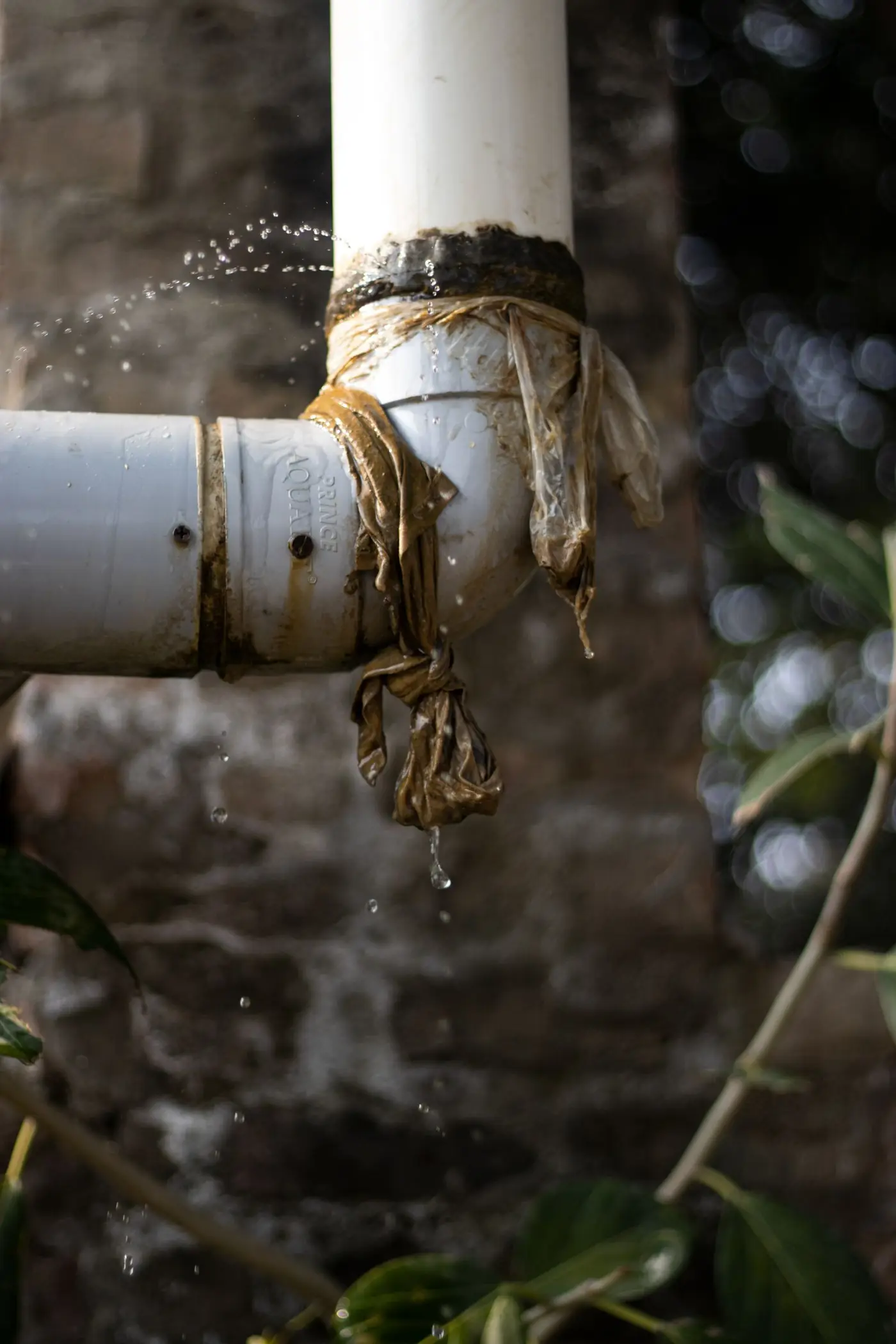
Quick answer: When a pipe bursts, shut off the main water valve, cut power to wet areas from a dry spot and call for help. A plumber fixes the pipe; a water damage crew removes the water, opens up wet walls and dries the structure. Burst-pipe water is usually clean at first, but it spreads into walls and floors quickly, so drying should start the same day.
| Cause | Where it happens | Warning signs |
|---|---|---|
| Freezing | Exterior walls, attics, crawl spaces, garages, unheated basements | Faucet gives only a trickle; frost on pipes |
| Corrosion | Older galvanized steel and some copper lines | Rusty or discolored water, pinhole leaks, stains |
| High water pressure | Anywhere in the system | Banging pipes, running toilets, leaky fixtures |
| Failed fittings and supply lines | Toilets, sinks, washers, ice makers | Drips under sinks, damp cabinet floors |
| Ground movement and tree roots | Main water line and slab pipes | Wet spots in the yard or warm spots on the floor |
Water expands as it freezes, which puts pressure on pipes from the inside. That is why a pipe often leaks only once it thaws. The Red Cross lists exterior walls and the point where water enters through the foundation as likely places for frozen pipes.
When a pipe bursts on an upper floor or in an attic, water runs down through the ceiling below. Ceiling drywall soaked with water can sag and fall, and insulation above it holds water for days. If a ceiling is bulging, keep people out of the room and do not poke it while standing underneath. Read more about ceiling water damage repair.
The American Red Cross recommends these steps before and during cold weather:
To thaw a frozen pipe, the Red Cross advises a hair dryer, space heater or warm towels, and never an open flame. If you cannot find or reach the frozen section, call a licensed plumber.
A sudden burst pipe is usually a covered water loss under a homeowners policy, while the repair of the pipe itself may not be. Some policies exclude freeze damage when a home was left without heat or not checked during cold weather. Condo owners should check both their own policy and the association's master policy. Report the loss right away and keep the plumber's invoice, which shows the cause.
Local note: Freeze damage is not just a northern problem. Winter Storm Uri burst pipes across Texas in 2021, many in attics. Deep cold splits pipes every year in Minnesota, Colorado and Alaska, often in garages, crawl spaces and empty cabins.
Shut off the main water valve, usually where the water line enters the house or near the water heater. Then turn off power to wet areas from a dry spot, open faucets to drain the lines, move valuables out of the water and call a plumber for the pipe and a restoration crew for the water.
A licensed plumber repairs or replaces the broken pipe. The restoration crew handles the water damage: extraction, drying, tear-out of wet materials and repairs. On most burst-pipe jobs you need both, and the plumber usually comes first.
The Red Cross says that if you turn on a faucet and only a trickle comes out, suspect a frozen pipe. Frozen pipes are most likely along exterior walls and where the water service enters through the foundation.
Most homeowners policies cover sudden water damage from a burst pipe. Some exclude freeze damage if the home was left unheated or unattended without precautions. Policies differ, so check yours and report the loss quickly.
Yes. Water from a burst pipe often soaks into wall cavities, insulation and subfloors where you cannot see it. If those areas are not dried within 24 to 48 hours, as the EPA advises, mold can start to grow.
Pumps and extractors pull standing water out of floors, carpet and basements fast.
Stains, sagging drywall and leaks from roofs, bathrooms and AC lines.
Air movers and dehumidifiers dry walls, floors and framing, checked with moisture meters.
Leaks & Prevention
Step-by-step actions for the first hour after a pipe bursts, how to spot a hidden burst, and how to prevent frozen pipes.

Insurance & Claims
What a standard home policy covers, the big exclusions like flood and slow leaks, and how to file a water damage claim.
Leaks & Prevention
Why tank water heaters leak from the bottom, what to do in the first ten minutes, and when the tank needs replacing.
Last reviewed November 18, 2026 by DryFlare Editorial. General information, not legal, insurance or professional advice. Read our editorial policy.
Water where it shouldn't be?
Call DryFlare 24/7 to get water damage help started.
Call 1-800-555-0199